Radon Mitigation Systems
Active sub-slab and sub-membrane systems for central Indiana basements, slabs, and crawl spaces, installed by IDOH-licensed mitigators.
Typical$1,100-$2,200
Radon testing and mitigation across Indianapolis and the donut counties, every job performed by an IDOH-licensed pro holding a current NRPP or NRSB certification. Most installs finish in a day, and every system is verified with a retest after the fan runs.
Step 1
Call or text with your test result, or with no result yet. We sort out whether you need a confirmation test, a long-term test, or a mitigation scope, in about ten minutes.
Step 2
An IDOH-licensed mitigator looks at every foundation under the roof, basement, slab, and crawl, runs a suction check where the fill is unknown, and writes a fixed price.
Step 3
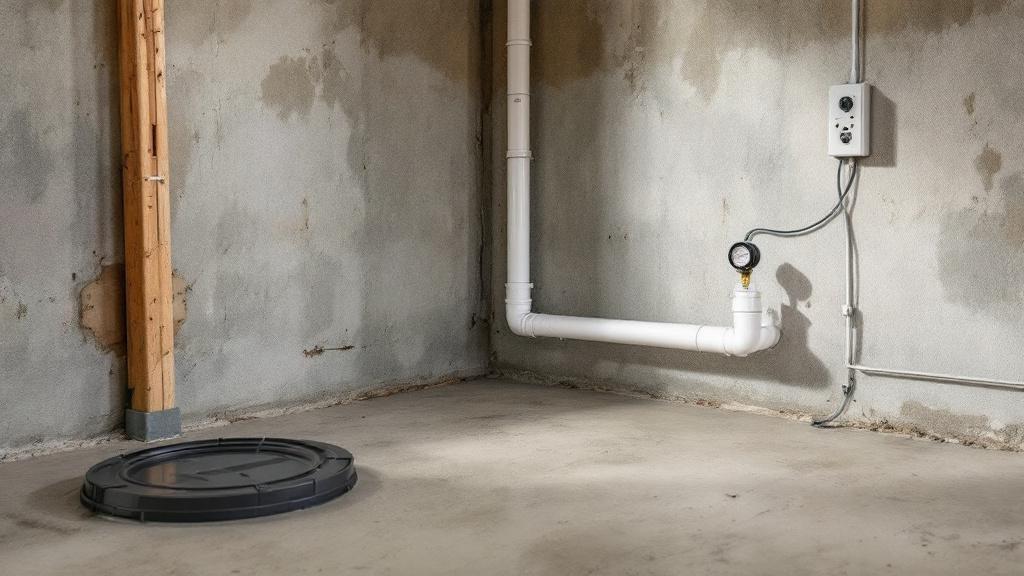
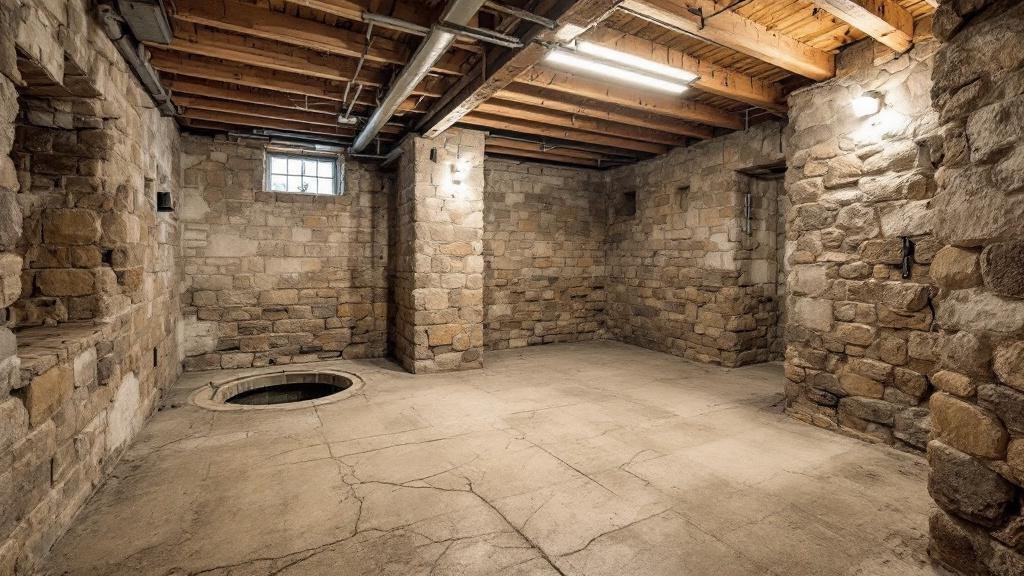
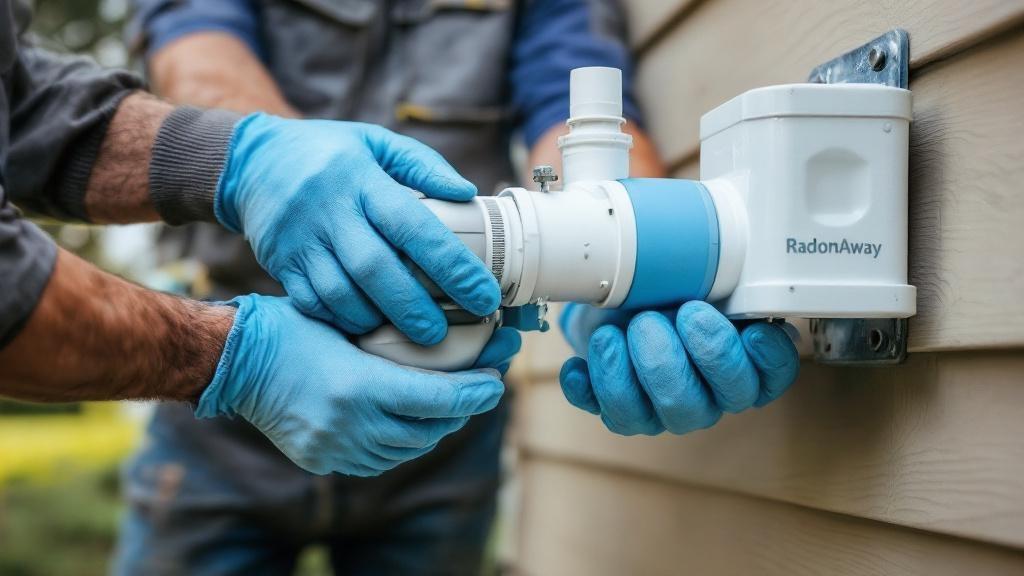
Most systems go in within a single working day: suction pit or crawl membrane, sealed pipe, a fan outside the living space, a gauge marked at startup, and labels on everything.
Step 4
Once the fan has run, a 48-hour test under closed-house conditions confirms the result in writing. The number goes in your file with the scope and warranty.
Share of 43,148 Indiana radon lab tests from 2008 to 2017 that came in at or above the EPA action level of 4.0 pCi/L.
Share of tested homes in Marion, Hamilton, Hendricks, and Johnson counties with at least one result at or above 4.0 pCi/L, 2002-2022.
Indiana Department of Health, Radon Results and Testing Rates for Homes 2002-2022
US lung cancer deaths linked to radon each year, about 2,900 of them among people who never smoked.
Marion, Hamilton, Johnson, Hendricks, Boone, and Hancock counties are EPA Radon Zone 1; Morgan County is Zone 2.
Marion, Hamilton, Hendricks, and Johnson counties fall in the 25-50 percent band of tested homes with at least one result at or above 4.0 pCi/L.
39 percent of 43,148 Indiana lab tests from 2008 to 2017 were at or above 4 pCi/L.
Indiana licenses radon testers and mitigators under IC 16-41-38 and 410 IAC 5.1, and mitigators must also hold a current NRPP or NRSB certification.
The state publishes the list of certified radon testers and mitigators.
Uranium-bearing New Albany Shale beneath northwest and west-central Marion County, and glacial till carrying shale-derived uranium, drive Indianapolis-area radon.
Regional geologic radon assessment covering Indiana, including black shale and glacial deposit sources.
Every job comes with a written quote and no-pressure consultation. Workmanship warranty terms are set by your lead technician and confirmed before work begins.
Active sub-slab and sub-membrane systems for central Indiana basements, slabs, and crawl spaces, installed by IDOH-licensed mitigators.
Short-term and long-term radon measurement by IDOH-licensed primary testers, for screenings, real estate, and post-mitigation checks.
Sub-membrane depressurization for the crawl-space houses that dominate older Indianapolis neighborhoods.
Inspection-window testing and deadline-driven mitigation for Indiana home sales, built around the seller disclosure.
Multi-zone measurement and mitigation for schools, daycares, multifamily, and commercial buildings.
Fan replacement, manometer and alarm fixes, membrane and seal repairs, and retests for existing systems.
Start under the ground. Beneath northwest and west-central Marion County lies the New Albany Shale, a Devonian-Mississippian black shale rich enough in uranium that geologists treat it as the region's primary radon source. Then the glaciers arrived. Wisconsin-age ice ground up shale and spread the debris as till across the plain that now holds Indianapolis and its suburbs, carrying shale-derived uranium well beyond the rock itself.
The measurements follow the geology. The EPA maps Marion, Hamilton, Johnson, Hendricks, Boone, and Hancock counties as Radon Zone 1, its highest-potential tier. The Indiana Department of Health's results for 2002 to 2022 put Marion, Hamilton, Hendricks, and Johnson counties in the band where a quarter to half of tested homes logged at least one result at or above 4.0 pCi/L, and an AARST summary of 2008-2017 lab data found 39 percent of 43,148 Indiana tests above that line.
None of it forecasts one house. A Zone 1 county is full of low readings, and the house next door can read nothing like yours. Our county data page collects the numbers with their sources.
Indiana regulates radon work through the Indiana Department of Health under IC 16-41-38 and the rules at 410 IAC 5.1. Anyone paid to test needs a tester license, issued in tiers: a secondary tester places and retrieves passive devices that a certified lab analyzes, and a primary tester may also measure with active continuous monitors. Anyone paid to mitigate needs a mitigator license, and Indiana adds a condition that keeps the work honest: the mitigator must also hold a current national certification from NRPP or NRSB.
That pairing matters because the national programs are what enforce the installation standard, ANSI/AARST SGM-SF-2023, covering fan placement, roof discharge, sump sealing, labels, and system gauges. The state publishes its list of certified testers and mitigators, so checking anyone takes a couple of minutes.
All mitigation pros you work with here hold the Indiana license and a current national certification. The license guide explains each category in plain terms.
Indiana's seller disclosure form puts a radon question in front of most sellers of one- to four-unit homes, asking about hazardous conditions and naming radon gas in the house or well. It does not require a test, which is why buyers in this market usually run one during the inspection period, and why a seller's "unknown" is a prompt rather than a red flag.
The inspection window is the moment that matters. A licensed short-term test, 48 hours at minimum under closed-house conditions, fits inside it. If the result comes back at 4.0 pCi/L or higher, the parties can negotiate a seller-installed system, a credit sized from a written quote, or an as-is purchase with the buyer installing after closing.
Whichever route the deal takes, the house should end up with a system installed by an IDOH-licensed mitigator and a verification retest on paper. Our real estate service sequences testing, scope, and install around the contract dates.
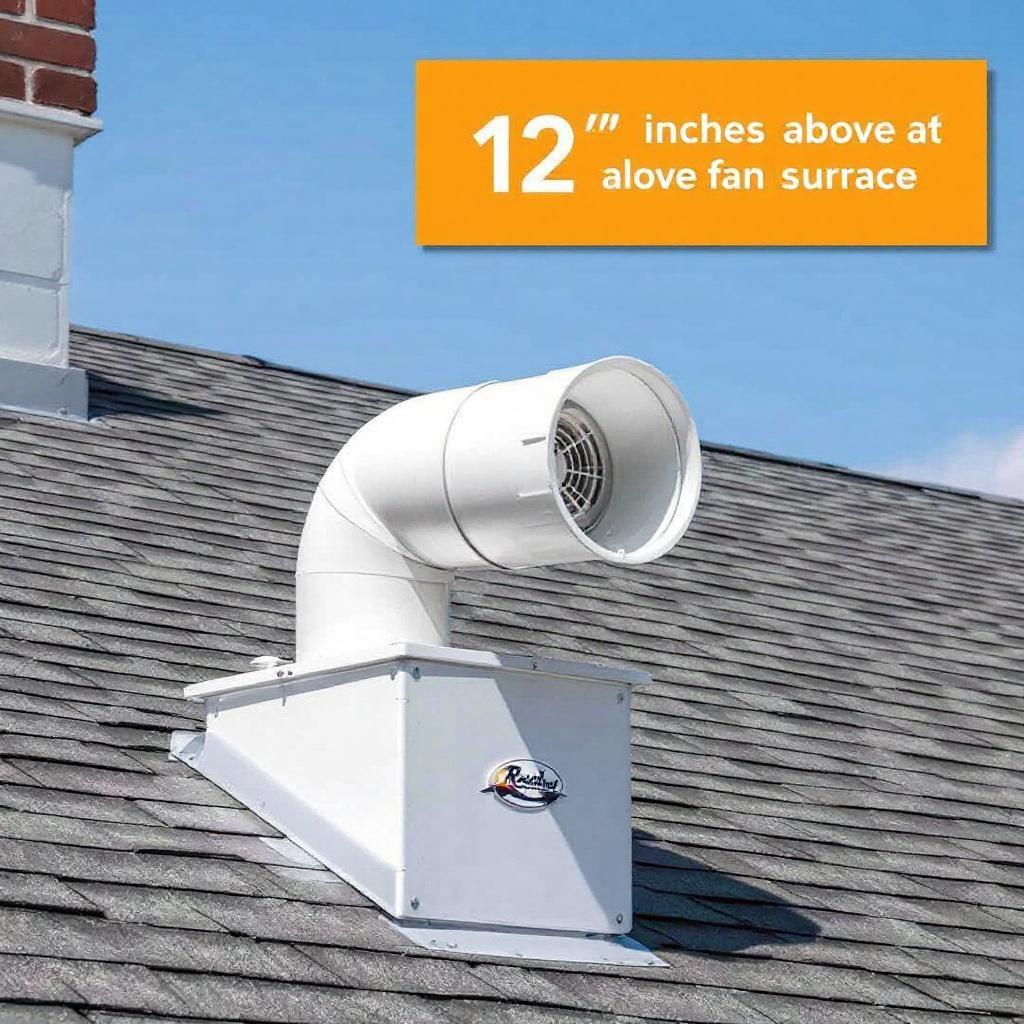
A finished system asks very little. In the basement or utility area there is a pipe with a U-tube gauge marked at its startup reading; outside or in the attic there is a fan that runs every hour of the year; on the roof there is a discharge above the eave line. Glance at the gauge now and then. Columns at different heights mean suction; columns sitting level mean the fan has stopped.
Indiana winters bring the one recurring maintenance quirk, condensation. Warm, damp soil gas climbing a cold pipe sheds water, and a properly sloped system drains it back below the slab. A gurgle or a sag deserves a look before it reaches the fan.
Plan on a fan replacement at some point; continuous duty wears bearings. Retest every two years and after any foundation, sump, or HVAC project, and keep every number in one folder. If the gauge or a retest says something changed, our repair service handles fans, gauges, and seals on any system.
Indianapolis and central Indiana and surrounding communities. Same-day estimates within 15+ neighborhoods.
Most central Indiana homeowners get a written fixed-price radon mitigation or testing quote within one business day. Every install is performed by an IDOH-licensed mitigator holding a current NRPP or NRSB certification.
Browse all 43 questions for more depth.
Most central Indiana basement and slab homes land between $1,100 and $2,200 for an active sub-slab system. Crawl-space houses needing a sealed membrane run $1,800 to $3,400, and a professional short-term test is $140 to $280.
What moves a number inside those bands is the house, and in this metro the house usually means the foundation count. A single poured basement in Avon or Fishers with a clean chase to the attic prices near the bottom. A Broad Ripple bungalow with a cellar, a crawl under the back addition, and a floor poured in three different decades prices near the top, because it needs a membrane, extra sealing, and sometimes a second suction point. Every quote here is written and fixed before work starts, and it names the diagnostics behind the design, not just the hardware. The pricing guide breaks the tiers down by foundation type, and the calculator gives a starting range for your address.
With sub-membrane depressurization: a heavy plastic membrane sealed over the crawl floor, seams overlapped and fastened at the walls and piers, and a fan pulling from beneath it. The crawl becomes a sealed suction field instead of an open soil surface.
Crawl spaces are the signature Indianapolis foundation, from brick-pier crawls under pre-war houses in Irvington and Fountain Square to the concrete-block crawls under postwar ranches in Lawrence and west Greenwood. An open crawl is effectively a dirt floor the size of your house, so it can out-emit every crack in a basement combined. The membrane turns that liability into the system's working surface. Expect the scope to include sealing the crawl's rim and penetrations, routing the pipe to an exterior or attic fan, and gasketing the access hatch so it still opens for the furnace and plumbing that so often live down there. See the crawl space service and why venting the crawl is not a fix.
Yes. Radon enters through the slab itself: the floor-wall joint, plumbing penetrations, and cracks. With no basement to dilute into, the gas arrives directly in the living space, which is why slab ranches in Speedway and Beech Grove test high regularly.
The slab ranch is the other workhorse of Marion County's postwar rings, and it mitigates cleanly: one suction point cored through the slab, usually in a closet or utility room, with the pipe run to the attic or up an exterior wall. The subtlety is under the concrete. Mid-century slabs were often poured on whatever fill was at hand, so suction may not travel as far as it would through the washed gravel beneath a 2010s build, and a communication test tells the design how many points the floor needs before anyone commits. Testing is also slightly different in a slab house: the device goes in a lived-in ground-floor room, because the ground floor is the lowest level there is. The Speedway and Beech Grove slab post walks through a typical job.
Not yet. That is a passive rough-in: a pipe from under the slab to the roof or attic, relying on natural draft alone. It becomes an active system when a fan is added. Test first; the stub only matters if the house reads high.
Builder stubs are everywhere in the donut-county subdivisions of Carmel, Fishers, Westfield, Brownsburg, and Avon, and they are genuinely good news, because the expensive parts of a retrofit, the slab penetration and the vertical chase, are already done. They are not a guarantee. The EPA rates passive systems well below active ones, and a tight new house can hold a 4-plus reading with the stub sitting right there in the wall. Two checks matter before celebrating: where the pipe terminates, since some stop short in the attic instead of exiting the roof, and what the house actually tests at after move-in. If the number is high, activation is usually the cheapest mitigation on our price list, $650 to $1,100. See the passive stub guide and the passive vs active comparison.
Yes. Under IC 16-41-38 and 410 IAC 5.1, anyone paid to test or mitigate radon in Indiana must hold an Indiana Department of Health license. A licensed mitigator must also hold a current national certification from NRPP or NRSB.
Indiana's structure is worth two minutes of a homeowner's attention because it makes vetting easy. The state licenses radon testers in two tiers, primary and secondary, and licenses mitigators separately, with the mitigator license tied to a current NRPP or NRSB certification; those national programs are what hold the actual installation to the ANSI/AARST standards. IDOH publishes the list of certified radon testers and mitigators on its website, so checking a company takes a lookup, not a phone tree. Homeowners working on their own house are outside the licensing requirement, but anyone you pay is not. Every pro you work with through this site holds the Indiana license and the national certification behind it. The license guide explains each category, and this walkthrough shows the verification steps.
Device type. A secondary tester may place and retrieve passive devices, like charcoal canisters, that a certified lab analyzes. A primary tester may also measure with active continuous monitors. Both need a current IDOH license and a national credential.
The split exists in Indiana's radon rules, 410 IAC 5.1 under IC 16-41-38, and it matters most in real estate, where the device type shapes the timeline: a passive device has to travel to a certified lab before there is a number, while a continuous monitor reports hour by hour on site. Indiana also has a separate radon laboratory tester category for the labs that analyze passive devices. The questions to ask are short: which device will be used, who holds the IDOH license on this job, what is the license number, and will it appear on the report? IDOH's published list of certified testers and mitigators answers the rest. A post-mitigation verification test deserves the same scrutiny as a sale test, since it is the number that declares the fix successful. More in the license guide.
Indiana's seller disclosure form asks whether there are hazardous conditions on the property and names radon gas in the house or well among them. Sellers must answer what they know; the form does not require testing. An "unknown" answer usually means the house has never been tested.
Indiana's residential disclosure law (IC 32-21-5) puts the radon question in front of most sellers of one- to four-unit homes, which makes radon a standard line item in central Indiana transactions rather than an exotic one. Read the answer the way an inspector would. A disclosed past result with a mitigation system means you should ask for the system's paperwork and the most recent retest. A "no" means no known radon, which is only as good as the testing behind it. An "unknown" is an invitation to test during your inspection period, which is what most buyers' agents here recommend regardless. If you are selling, a pre-listing test removes the suspense and prices the fix before negotiation does. See testing before you buy and the home sale walkthrough.
Yes, during the inspection period. Every county this site serves is EPA Radon Zone 1, and the seller's disclosure only reports what the seller knows. A 48-hour-minimum test by an IDOH-licensed tester settles the question before you own it.
The inspection window is the one moment the cost of fixing radon can still move to the other side of the table, which is why the test belongs in the same week as the general inspection, not after closing. Ask for a licensed test with tamper-resistant placement and a report that shows device type, location, start and stop times, and the tester's IDOH license number. If the house already has a system, ask for its install records and verify the manometer shows suction during your walkthrough. If the result lands at 4.0 pCi/L or higher, the EPA's guidance for transactions is to fix the home, and the remaining questions are scope, price, and who pays. The real estate service page covers how the sequencing fits a contract.
Radon testing and mitigation across Indianapolis and the donut counties, every job performed by an IDOH-licensed pro holding a current NRPP or NRSB certification. Mon-Sat 8am-7pm.